Mode
Classroom / Hybrid learning format
01 — DATA SCIENCE
Build practical skills in Python, data analysis, machine learning, and Generative AI, through guided learning and real projects.
Batch starting date05 October, 2026

02 — QUICK HIGHLIGHTS
The key details, learning structure, and learner experience — all in one place.
Classroom / Hybrid learning format
8–10 hours of guided learning per week
3 portfolio-focused projects with mentor feedback
Weekly doubt-clearing sessions and learning feedback
Practical skills in data analysis, machine learning, and AI
LSA Data Science Program Completion Certificate
03 — TECHNOLOGY STACK
The Data Science program brings together the languages, libraries, platforms, and AI tools used to analyse data, build models, and solve practical problems.
Programming foundations and workflow for Data Science.
Programming language for the Data Science workflow.
Track changes in development and project work.
Write and run code in a development environment.
Work interactively with code and analysis.
Organize data using Python structures.
Structure code with objects and reusable behavior.
Read and write files in Python.
Handle errors and exceptions in code.
Read and write tabular text data.
Work with structured data in JSON format.
Programming foundations and workflow for Data Science.
Programming language for the Data Science workflow.
Track changes in development and project work.
Write and run code in a development environment.
Work interactively with code and analysis.
Organize data using Python structures.
Structure code with objects and reusable behavior.
Read and write files in Python.
Handle errors and exceptions in code.
Read and write tabular text data.
Work with structured data in JSON format.
03 — WHAT YOU TAKE WITH YOU
The program goes beyond completing a syllabus. You’ll learn through practice, build projects that demonstrate your skills, and develop the confidence to apply what you know.
Learn by doing, not just by watching.
IN PRACTICEWork with Python, data tools, and AI technologies through guided exercises and practical problem-solving.
Turn concepts into something you can show.
IN PRACTICEBuild meaningful Data Science projects, document your work, and develop a portfolio that demonstrates your skills.
Learn to communicate what you can do.
IN PRACTICEPresent your projects, explain your approach, discuss your decisions, and communicate your technical work with confidence.
05 — PROGRAM DETAILS
Whether you're beginning your technical journey, building on an academic foundation, or adding Data Science to your existing skill set, the program is designed to give you structured learning, practical experience, and projects you can build on.
Start building practical data skills. Develop a strong foundation in Data Science through guided learning, hands-on practice, and projects.
Turn academic knowledge into practical experience. Strengthen your technical skills through applied learning, projects, and portfolio development.
Build a foundation for your next technology path. Learn the fundamentals of Data Science through a structured program with guided practice and project work.
Add data skills to your existing experience. Build practical knowledge of data tools, analytics, and AI through focused, project-based learning.
07 — CERTIFICATION
Complete the program and receive an LSA completion certificate that documents your learning and the skills covered throughout the program.
A sample certificate showing the format, course details, completion information, and certificate identification.
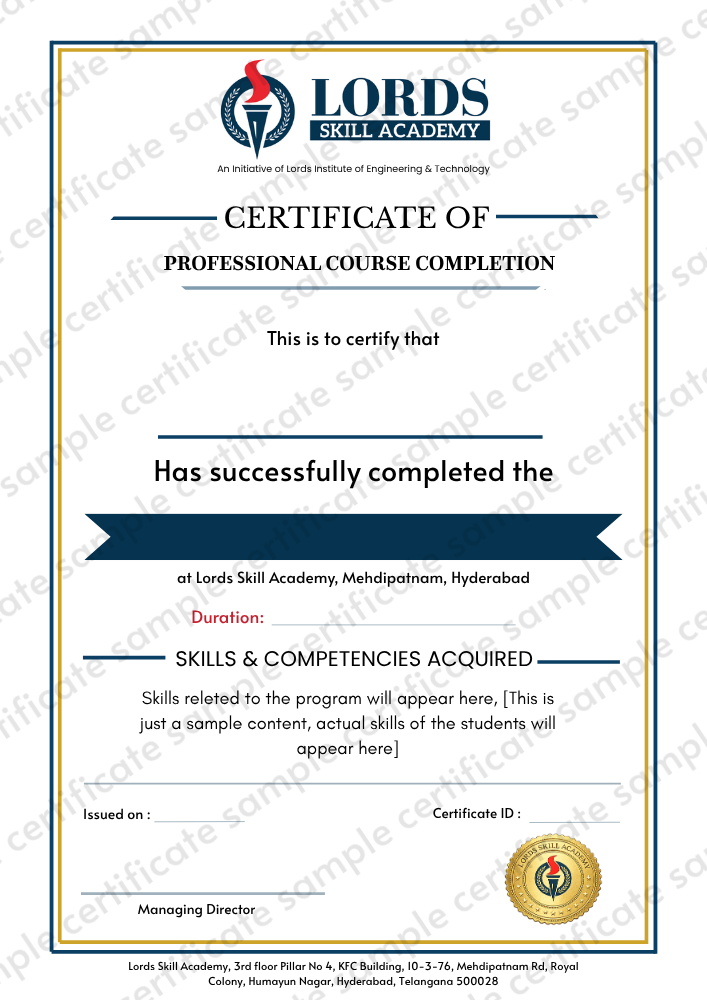
Receive a certificate from Lords Skill Academy upon successful completion of the program.
Demonstrate your understanding through practical learning activities, assignments, and program checkpoints.
Build projects throughout the program that you can document and showcase alongside your certificate.
Use your certificate and project work as part of your professional portfolio when presenting your skills to opportunities.
08 — LSA FACULTY & TRAINERS
LSA FACULTY & TRAINERS
Explore our trainers and discover their expertise, experience, and areas of practice.
See our trainers →09 — HIRING PARTNERS
LSA helps bridge the gap between learning and the workplace, connecting learners with industry exposure, internships, career support, and opportunities to put their skills into practice.

11 — CAREER GUIDANCE
Get practical guidance to understand your options, identify the skills you need to build, and create a learning path that fits your goals.
Talk to a career advisorExplore possible technology roles and the skills they typically require.
Identify the skills you already have and the areas where you can improve.
Build a structured learning path around your goals, interests, and current skill level.
Ask questions, discuss your progress, and get guidance as you continue developing your skills.
12 — CLASSROOM GALLERY
.jpg)


.jpg)
13 — READY TO START
Explore the program, ask your questions, and take the next step with LSA.